 Jack Wang
⚡ Quick Answer
A standard horizontal machining center typically requires 300–900 square feet (28–84 m²) of usable factory space, depending on machine size, pallet system, automation, and service clearance. The machine footprint alone rarely tells the full story—installation, maintenance, and material flow often add 30–50% more space.
Factory planners usually focus on spindle specs, pallet size, and cycle time first. Then the machine arrives, and suddenly the layout falls apart because the horizontal machining center space requirements were underestimated. I’ve seen this happen in automotive and aerospace shops across Asia and North America more times than I can count.
One case still sticks with me. A mid-sized supplier bought a premium 630 mm pallet HMC thinking they needed around 450 square feet. On paper, that looked fine. In reality, chip conveyor access, tool carts, and forklift movement pushed the real requirement closer to 700 square feet. Production started late by three weeks because the layout had to be rebuilt.
That’s expensive.
And avoidable.
The funny part? Most layout guides stop at machine footprint. What nobody tells you is the machine itself is often only half the equation.
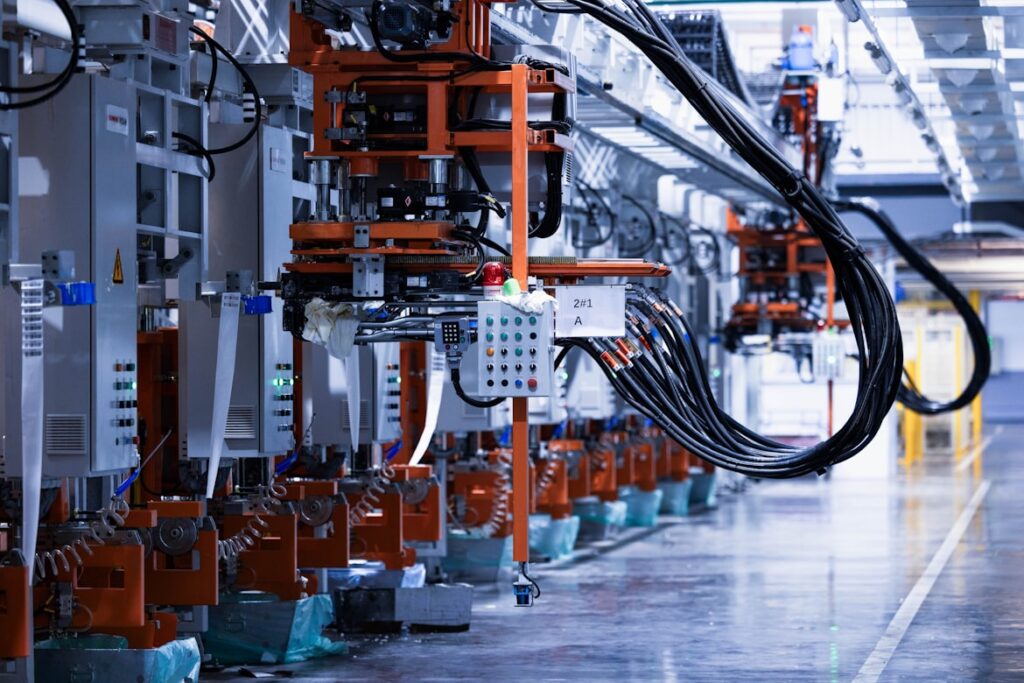
💡 Key Takeaway: The footprint printed in a machine brochure is not the same as the real floor space required for production-ready operation.
The Real Horizontal Machining Center Space Requirements Most Buyers Underestimate
Here’s the thing. Machine builders often publish only physical dimensions—length, width, and height.
That’s helpful, but incomplete.
A horizontal machining center doesn’t operate in isolation. It needs room for:
- Operators
- Maintenance access
- Chip removal
- Material handling
Think of an HMC like a parked truck inside a warehouse. The truck itself takes one area. But loading, unloading, walking paths, and safety zones take much more.
Sound familiar?
I’ve walked into plants where a million-dollar HMC sat in a corner with barely enough room to open side panels. Great machine. Terrible layout.
According to the U.S. Occupational Safety and Health Administration (OSHA), safe working clearances around industrial equipment directly affect maintenance safety and operational flow. Poor spacing often increases accident risk and downtime.
That matters more than most planners realize.
How Much Floor Space Does a Standard HMC Actually Need?
Let’s get practical.
The actual space requirement depends heavily on machine class.
Small HMC Footprint (400–500 mm pallet class)
These machines are common in compact production shops handling smaller components.
Typical machine footprint:
- 120–180 sq ft
Recommended total operational space:
- 300–400 sq ft
Common industries:
- Electronics
- Medical devices
- Precision components
Small HMCs are easier to place. But don’t assume they’re easy to install.
Even compact machines need service clearance behind the machine and side access for maintenance.
Mid-Size HMC Footprint (630–800 mm pallet class)
This is the sweet spot for many automotive and aerospace suppliers.
Typical machine footprint:
- 220–350 sq ft
Recommended total operational space:
- 500–750 sq ft
This category is where most planning mistakes happen.
Why? Because pallet changers, tool storage, and material handling all scale up fast.
A common example is a 630 mm pallet HMC from Makino or DMG MORI. On paper, the footprint seems manageable. Once you add chip conveyors and tool access, the space demand jumps.
Large HMC Footprint (1000 mm+ pallet class)
Large-frame HMCs are built for serious industrial workloads.
Typical machine footprint:
- 400–550 sq ft
Recommended total operational space:
- 800–1,200+ sq ft
These are common in:
- Heavy equipment
- Aerospace
- Energy
- Large-part machining
Not gonna lie—once you get into this size class, floor planning becomes a strategic project, not just equipment placement.
A realistic estimate for horizontal machining center space requirements is usually 30–50% larger than the machine footprint listed by manufacturers. Smart factory planners calculate total operational space, not machine dimensions alone.
Why Machine Footprint Is Only Half the Story in Industrial Floor Planning
This is where smart planners save money.
And where rushed buyers get burned.
Operator Access Zones
Operators need room to load parts, inspect workpieces, and change tooling.
Minimum recommended clearance:
- Front: 4–6 ft
- Side: 3–5 ft
Anything tighter creates bottlenecks.
Been there? Most factories have.
Tool Cart and Maintenance Clearance
Maintenance teams hate cramped layouts.
And for good reason.
Machines need access for:
- Spindle service
- Coolant maintenance
- Electrical inspection
If your team can’t easily access panels, service time goes up.
Simple as that.
This is why planned maintenance matters. Shops focused on CNC machine maintenance usually experience fewer layout-related service delays.
Coolant, Chip Conveyor, and Utility Space
Spoiler: chips take space.
Lots of it.
Modern HMCs can generate heavy chip loads, especially in cast iron or aluminum production. Chip conveyors, coolant tanks, and filtration systems all require additional floor area.
Then there’s utilities:
- Power
- Air
- Coolant lines
- Data connections
If you skip utility planning early, installation gets messy fast.
What Extra Space Do You Need for CNC Machine Installation?
This part gets overlooked constantly.
And it shouldn’t.
During CNC machine installation, you need temporary and permanent space.
Rigging and Delivery Access
Large HMCs arrive as heavy industrial equipment.
That means:
- Crane access
- Forklift clearance
- Door clearance
- Rigging paths
I once worked with a facility that forgot to measure doorway width before delivery.
Yes, really.
The machine arrived. It didn’t fit.
That mistake delayed installation by nine days.
Foundation and Load Capacity Checks
Horizontal machining centers are heavy.
Very heavy.
A mid-size HMC can easily weigh 20,000–35,000 lbs, while larger systems can exceed 50,000 lbs.
The National Institute of Standards and Technology (NIST) regularly emphasizes equipment installation planning and facility readiness as major contributors to manufacturing efficiency.
Your floor must support:
- Static machine load
- Dynamic cutting forces
- Vibration control
Think of your concrete floor as the machine’s foundation in every sense of the word.
Bad floor planning equals bad machining.
Should You Plan an HMC Factory Layout Around Automation From Day One?
Short answer: yes.
Even if you are not buying automation today.
I strongly recommend planning for future automation because retrofitting space later is painful and expensive. I’ve seen factories move coolant lines, relocate tool storage, and even shift walls just to fit a robot cell.
That gets ugly fast.
If automation is even remotely part of your roadmap, reserve floor space now.
Pallet Pools and Robot Cells
Adding automation changes everything.
A pallet pool adds:
- Storage racks
- Transfer systems
- Control cabinets
Robot cells add even more:
- Safety fencing
- Robot travel area
- Part staging
Typical extra space required:
- Pallet system: +150–300 sq ft
- Robot cell: +250–500 sq ft
Factories investing in CNC automation integration usually design around long-term expansion instead of short-term convenience.
That’s the smarter play.
Manual Loading vs Automated Loading
Here’s my recommendation.
Pick automation-ready layouts whenever possible.
| Setup | Space Required | Productivity | My Recommendation |
|---|---|---|---|
| Manual Loading | Lower | Moderate | Good for smaller shops |
| Pallet Automation | Medium | High | Best balance |
| Full Robot Cell | Highest | Very High | Best for volume production |
If your shop runs high-mix, low-volume jobs, manual loading can still make sense.
For continuous production? I’d pick pallet automation every time.
It’s like buying a house with room to expand. Future-you will thank you.
Horizontal Machining Center vs Vertical Machining Center: Which Needs More Space?
This question comes up constantly.
And yes—HMCs usually need more floor space than VMCs.
But that doesn’t automatically make them worse.
| Machine Type | Typical Total Space | Best For |
|---|---|---|
| Vertical Machining Center | 200–500 sq ft | Small shops, lower volume |
| Horizontal Machining Center | 300–1,200+ sq ft | High-volume, multi-sided machining |
A vertical machine wins on compact footprint.
A horizontal machine wins on throughput.
That’s why comparing only square footage misses the bigger picture.
A well-planned HMC often replaces multiple setups and reduces handling time. That can offset the larger footprint with higher output.
If you’re still comparing layouts, this guide on horizontal machining centers vs vertical systems is worth reviewing. <!– SNIPPET-BAIT –>
The best way to evaluate horizontal machining center space requirements is to compare total productivity per square foot—not machine size alone. More floor space can still mean higher profit if throughput improves.
What’s the Best Factory Layout for Multiple Horizontal Machining Centers?
Now we’re talking real factory planning.
When installing multiple HMCs, layout strategy matters just as much as machine selection.
Step-by-Step Layout Planning
- Measure total usable production space
- Map machine footprints and safety clearances
- Add utility and maintenance zones
- Plan material flow paths
- Reserve automation expansion space
- Validate forklift and rigging access
Simple checklist. Huge impact.
I recommend planning material flow before finalizing machine position.
Why?
Because material movement is the bloodstream of your shop. Bad flow slows everything.
Linear Layout
Machines in a straight row.
Best for:
- High-volume production
- Consistent part flow
Pros:
- Clean organization
- Easy supervision
Cons:
- Less flexible
Cell Layout
Machines grouped by production family.
Best for:
- Mixed production
- Flexible manufacturing
Pros:
- Faster internal movement
- Better workflow efficiency
Cons:
- Needs more planning
Flexible Smart Factory Layout
This is my preferred layout for modern facilities.
Why?
Because change happens.
New jobs. New automation. New machines.
Factories using industrial CNC software and real-time monitoring often benefit most from flexible layouts that support rapid adjustments.

💡 Key Takeaway: A good HMC layout balances machine placement, workflow, maintenance access, and future automation—not just available floor space.
Frequently Asked Questions
Can I install an HMC in a small shop?
Great question — yes, but space gets tight quickly.
Smaller HMCs can fit into compact facilities, but I recommend having at least 300–400 square feet available per machine. That gives enough room for safe operation and maintenance without creating workflow bottlenecks.
How much clearance is required around an HMC?
A practical rule is:
- Front: 4–6 ft
- Sides: 3–5 ft
- Rear: 2–4 ft minimum
This depends on service access and chip conveyor design. Always verify machine-specific requirements with the OEM.
Does automation double floor space requirements?
Short answer: yes. But not always.
A robot cell or pallet automation system can significantly increase floor space requirements, though productivity gains often justify it. In many cases, output rises faster than space usage.
How do I calculate future expansion space?
Honestly, it depends — but I tell clients to reserve at least 20–30% additional space for future growth.
That extra area gives room for:
- Automation
- Tool storage
- More machines
- Material staging
Leaving expansion space now is much cheaper than reworking the shop later.
How do I reduce wasted space in HMC factory layouts?
Focus on workflow first.
The best layouts minimize unnecessary movement between loading, machining, inspection, and shipping. Efficient layouts reduce wasted walking time, forklift traffic, and production delays.
The Bottom Line
The biggest mistake factory planners make is confusing machine footprint with real operational space.
They are not the same.
A horizontal machining center might physically fit in your facility. That doesn’t mean it will fit your workflow.
The smartest planners calculate:
- Machine footprint
- Operator clearance
- Maintenance access
- Material flow
- Future automation
That’s how you build a layout that works now and still works later.
If you’re planning around horizontal machining center space requirements, focus less on where the machine fits and more on how production moves around it.
That shift changes everything.
What layout challenge are you working through right now? Drop a comment and let’s talk shop.

Jack Wang is a CNC manufacturing strategist with 14 years of experience in industrial machining systems and precision metalworking automation. He has consulted for multiple Asian and North American machining facilities on CNC optimization projects.
Now share tips ”CNC Milling Systems” on “gedmetalshop.com“
